
There’s no shortage of streaming platforms competing for your attention right now. Between billion-dollar studio backings, endless content libraries, and algorithms designed to keep you scrolling, the modern viewing experience has become less about discovery and more about saturation. There is always something to watch, and yet somehow, it has never been easier to feel like there’s nothing worth watching.
That’s where Dropout.TV quietly separates itself from the pack.
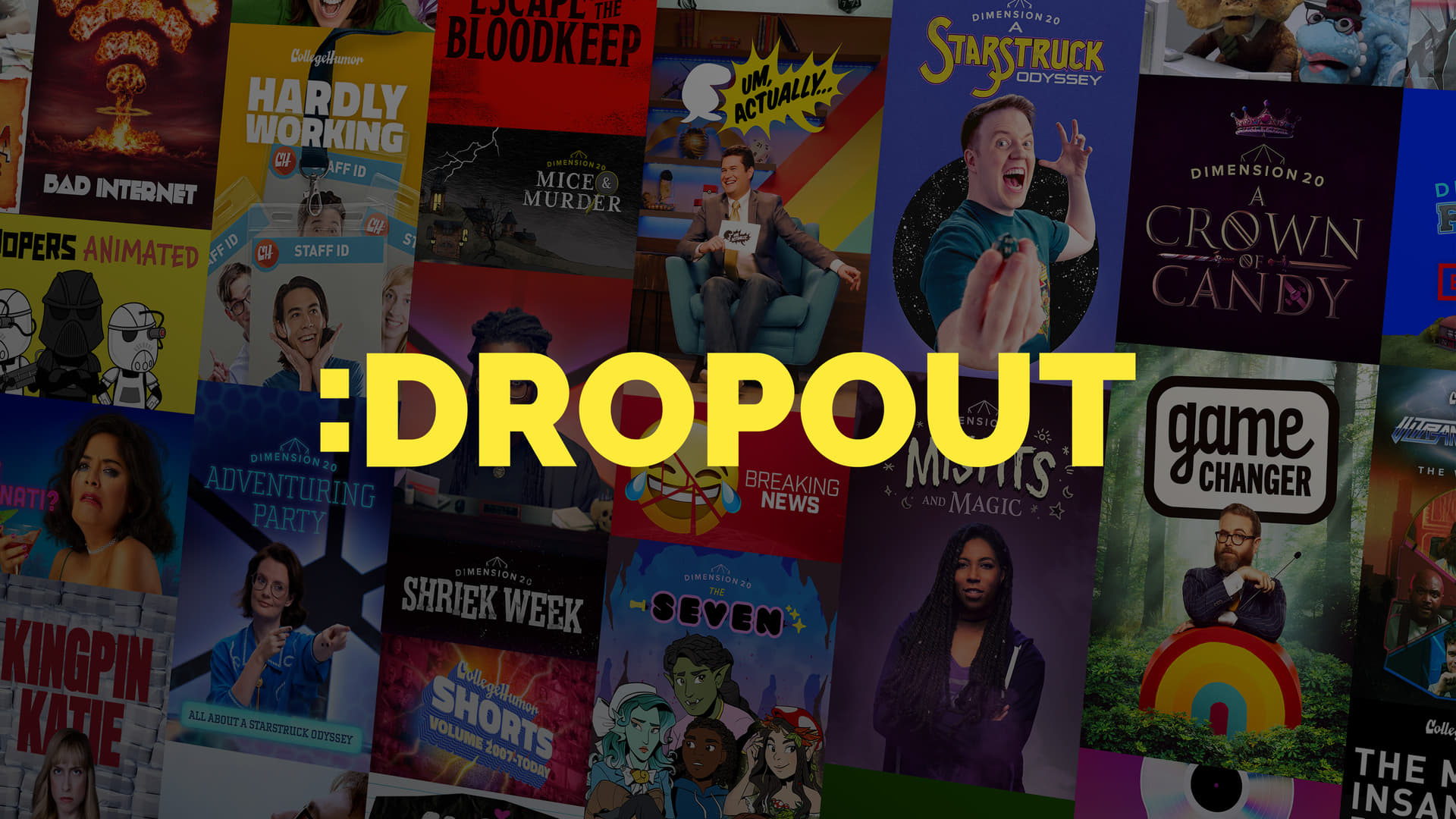
I’ll be honest - I didn’t discover Dropout because of some massive marketing push or industry buzz. In fact, I’ve been watching Dropout for so long at this point that I genuinely couldn’t tell you the first thing I watched on the platform. And honestly, I’m okay with that. Because what that really means is that Dropout didn’t win me over with one show or one viral clip. It won me over with consistency.
That said, like a lot of people, I do remember the feeling of discovering it. A clip from Game Changer here, a moment from Make Some Noise there - something that made me stop scrolling and actually laugh. Not just a quick smirk, but a genuine, “what is this?” kind of reaction. That curiosity led me down the rabbit hole, and the deeper I went, the more it became clear that this wasn’t just another niche streaming platform trying to find its place.
Dropout had already found it.
While most platforms are chasing scale, Dropout has focused on identity. It knows exactly what it is, exactly who it serves, and most importantly, why its content works. You see that in everything from the unpredictable brilliance of Game Changer to the rich, character-driven storytelling of Dimension 20. There’s a consistency not just in quality, but in voice.
Nothing feels manufactured. Nothing feels like it was designed by committee. There’s a looseness to the performances and a trust in the talent that allows moments to breathe. It feels like you’re watching people who are not only incredibly good at what they do, but who are genuinely enjoying doing it.
That kind of trust is rare.
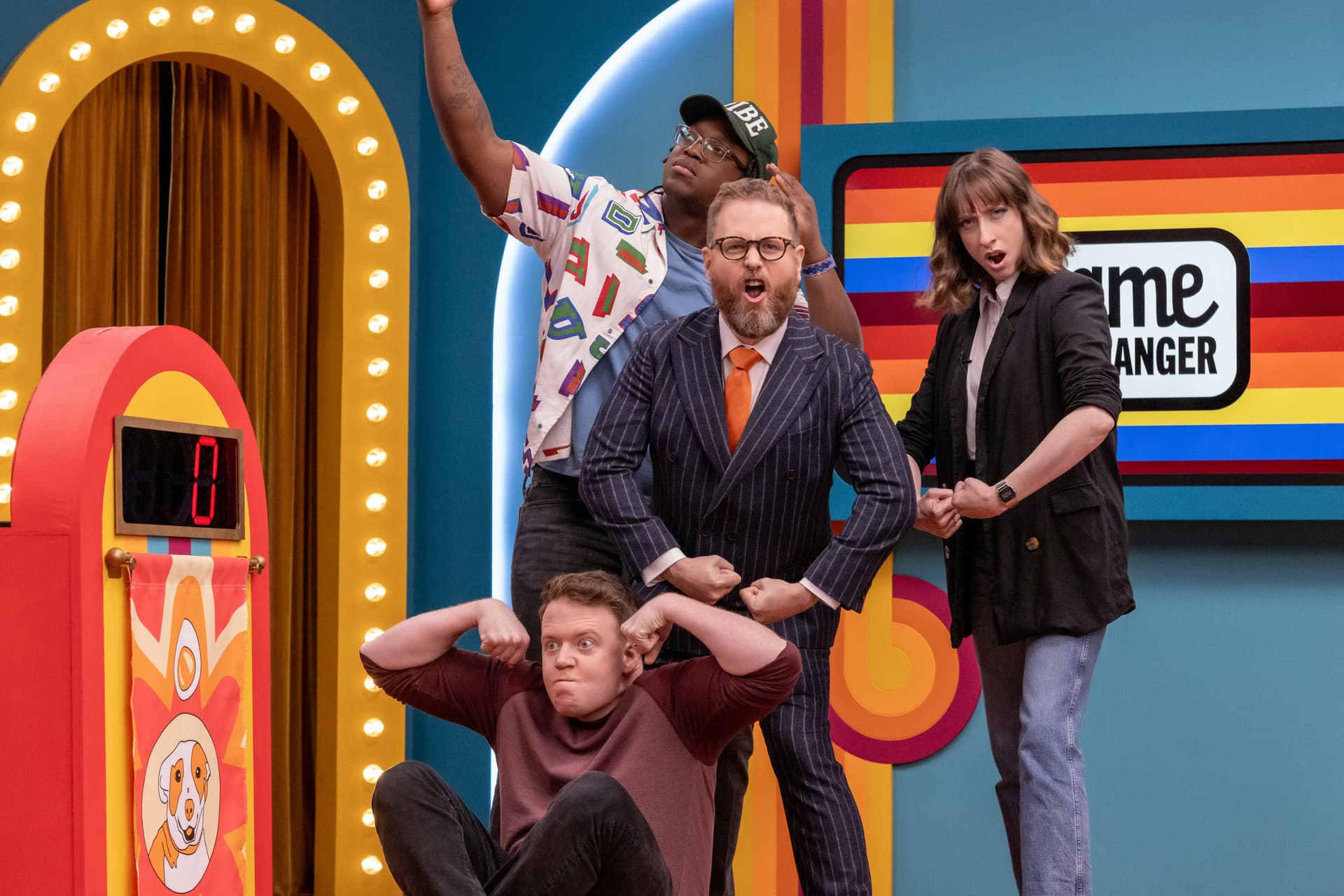
Under the leadership of Sam Reich, Dropout has embraced a creator-first philosophy that stands in stark contrast to much of the current industry. Instead of chasing trends, it builds environments. Instead of forcing content into formulas, it allows ideas to evolve naturally. And instead of prioritizing output, it prioritizes voice.
You can feel that difference almost immediately. When performers are given the space to experiment, to take risks, and to actually play, the result is content that feels alive. The comedy hits harder, the stories land more effectively, and the connection between performer and audience feels genuine.
And that connection is what keeps you there.
Because after watching Dropout for as long as I have, the performers start to feel familiar in a way that goes beyond just recognizing faces. There’s a comfort to it. A sense of community. You start to feel like you know these people, even though you obviously don’t.
And what’s been just as surprising is how that connection doesn’t stop at the screen - it carries over into real life.
Within my own group of close friends, people I genuinely consider family, we all have very different tastes when it comes to what we watch. It’s rare that there’s one show or one platform that consistently overlaps across everyone. And yet, Dropout has somehow become that common ground. I honestly can’t think of a time we’ve gotten together - whether it’s a small hang or a bigger group - where something from Dropout hasn’t come up in conversation. Whether we’re quoting bits, referencing moments, or just talking about what we’ve been watching, it’s always there in some form.
That kind of shared connection is rare. And it says a lot about what Dropout has built.
It’s not just content you watch. It’s content you talk about. Content you share. Content that sticks.
And that makes it all the more rewarding when you see the performers succeed outside of the platform.
When Jeremy Culhane pops up on Saturday Night Live, or Brennan Lee Mulligan shows up in something like Ted, or Caitlin Reilly appears on @midnight, or even when multiple Dropout performers - including Sam himself - pop up on The Rookie, there’s this immediate reaction of, “Oh, that’s awesome.”
You find yourself rooting for them. Genuinely.
And that’s not something you can manufacture. That kind of connection only happens when a platform builds trust with its audience over time.
But what truly elevates Dropout beyond just being a great streaming service is something that, frankly, more platforms are still trying to figure out.
Inclusion.
And not the kind of inclusion that’s treated like a marketing strategy or a temporary spotlight. On Dropout, inclusion is part of the foundation. Across its shows, you see a wide range of voices and perspectives represented - different races, genders, sexual identities, and lived experiences - not as a feature, but as a given. It’s never forced, never highlighted for the sake of attention. It simply exists as part of the environment.
And more importantly, it exists in a way that feels safe.
There’s a level of respect built into these productions that allows performers to be fully themselves without hesitation. That comfort translates directly to the screen. The comedy feels more natural, the storytelling feels more honest, and the interactions feel real because they are grounded in an environment where people are supported.
That matters more than people realize.
In an industry that often talks about inclusion while struggling to implement it in meaningful and consistent ways, Dropout doesn’t make a spectacle of it. It doesn’t need to. It just does it, and the result is better content, stronger collaboration, and a more engaged audience.
And that philosophy extends beyond just what’s on screen. It’s part of why supporting Dropout feels different, too.
We all complain about rising subscription costs across streaming platforms. We question value. We cancel services. We rotate subscriptions. It’s become part of the experience.
Dropout is the only platform where I’ve genuinely had the opposite reaction.
Instead of asking, “Is this worth it?” I’ve found myself asking, “How can I give you more money?”
And I mean that sincerely. I subscribe through their platform, I subscribe through their YouTube channel, and I’ve picked up merch along the way - not because I feel like I have to, but because I want to. Because it feels like supporting something that’s actually worth supporting.
That’s not something you can fake. That’s earned.
That’s what makes Dropout special. It’s not trying to be the biggest name in streaming or flood your screen with content designed to keep you passively watching. It’s building something intentional, something creative, and something welcoming.
And in doing so, it’s proving a point that the rest of the industry would be wise to pay attention to. Audiences aren’t just looking for more content. They’re looking for better content. They’re looking for authenticity, originality, and spaces that feel like they were built with care instead of calculation.
Dropout.TV delivers on that consistently.
If you’re someone who feels like modern streaming has become a little too predictable, a little too safe, or a little too disconnected from the people actually making the content, Dropout offers something different.
Not louder. Not bigger. Better.
And right now, that difference matters.